I was a graduate student when I first appreciated the idea of competing theories to explain a natural phenomenon. I briefly worked on cancer cells migration. The majoritarian idea in the field was that cancer sheds a lot of spindle shaped cells that migrate to secondary sites to seed secondary tumors (1). Though, no one has really looked at a live spindle shaped cancer cell moving and then seeding a secondary tumor; within any human or animal study models. There is another group that proposes cancer cells move out as clumps of cells and have a better chance of survival through journey in the circulatory system. A microscopy study looked at xenotransplanted cancer cells in mice. It showed a clump of cells in the neighbouring tissues (2). However, this demonstration did not really change the predominant view in the field. One can argue that it is hard to establish if that clump of cell was an accident or if that really spawned secondary tumors elsewhere. As much as I know, the jury on the mechanism of cancer cell migration is still out.
How science works is that an observation leads to theorisation or hypothesis, which can be tested through further predictable observation or experimentation. With new evidence in light, theories evolve and the science cycle continues (3). In the case of cancer cell migration, there happen to be two theories, with evidence in each one’s favour and limitations to both. One is favoured amongst the scientific community because of the body of evidence behind it. But, perhaps with time, this can change. The completion between two seemingly contradicting hypotheses drives scientific thought and discussion, along with experimentation. In some cases it can quite literally become a race.
When clinicians and scientists were trying to understand transmissible diseases like Creutzfeldt-Jakob disease (CJD) and mad cow disease, they were surprised. Unlike other viral or infectious diseases, nucleases didn’t affect transmission when a treated extract was used as an infection agent. It was as if something non living was causing the disease! There were opposing ideas at the time to explain this observation; one argued for a slow cycling virus with an unusual nucleic acid that was resisting these nucleases (4). Another one argued for a protein based molecule that was the infectious agent. Both seemed equally plausible at the time. It was after Prusiner used a purified mutated protein extract (prions) to cause the infection in model animal organisms that the other theory stopped making sense anymore (5). A clean decisive experiment culled the competing theory.
It makes the science richer, having competing theories that resolve in time as more evidence and observations are mounted. Sometimes it takes the shape of a clean, decisive controlled experiment, in other cases, one theory may explain existing data better, or predict outcomes better. More observations, more experimentation, more data, more arguments, and we may have better answers than before. Some questions though are harder to answer even with the seemingly robust scientific framework.
Questions about the past of life on earth, before humans existed, or before documentation existed, are harder to answer. We can’t go back in time to look at it. Does that mean one can not ask questions about these events and phenomena of the past? We could; and have theories that attempt to explain these phenomena. In many of these cases, one postulates a theory and argues that in consequence, something could be observed, or it is simply the best way to reconcile all the evidence present. Darwin’s work on natural selection and evolution converged ideas from comparative anatomy, paleontology, biogeography, ecology, economics, artificial selection among other lines of arguments and evidence (6). With updates, some core tenets of his work continue to inform our current understanding of evolution a couple of centuries later. Now natural selection has been demonstrated in the field as well as a flask (7, 8).
The story of the origin of life on earth, the possibility of such a neat field or flask demonstration is harder. There are presently two most important models postulated, the small molecule world and the RNA world.
Proponents of the small molecule world believe that the transition from non-living to living started with development of a primitive metabolic system. They work on elaborating how a simple set of reactions could collectively organise to perform a more complex chemistry that allows use of energy from the environment and sustainable creation of order. This is a metabolism-first world (9).
For proponents of the RNA world, life started with a primitive genetic system made of RNA molecules that were catalytic as well as self replicating. These RNA polymers are presumed to be self-assembled from a pool of monomers and small polymers, by catalysis and Darwinian evolution. This is a genes-first world (10).
The process of development of living systems from chemistry would have required several (not necessarily sequential) steps, from initiation of metabolism or replication, encapsulation, selection, propagation, and building of the next system; replication or metabolism. Replication and metabolism, or self sustenance and self propagation are two most important symptoms of life (11).
There are theorists and experimentalists that continue to work on defining conditions, feasibility, demonstration of parts of these processes, and all that can be done. Each theory has its own proponents, merits and critique. For example, discovery of autocatalytic RNA was a big win in favour of the replication-first RNA world (12). Small molecule world proponents show how a pH gradient suffices to reduce carbon-di-oxide to organic compounds (13). They argue how some metabolic pathways are common to all life forms (14). Both groups continue to show how these small molecules or RNA can be encapsulated in membranes (15, 16).
The truth of the matter is that these chemical reactions may be testable, repeatable in a flask; they don’t demonstrate what happened in the Hadean seas and surfaces four billion years ago. While to argue for evolution, there are fossils to look at and gather information from, the origin of life has not a lot of historical evidence to count on. There are pieces of geological evidence that clues us in on atmospheric conditions and possible organic signatures (17). What we can do is conjecture and develop models based on evidence we have.
While these bits are exciting, promising, these theories do not yet explain a whole lot. How a polymer was formed in the first place; either of nucleotides or amino acids? How does one maintain electrochemical gradients across a physical ‘membrane’ to drive energetically uphill biochemical reactions? This is just the first unexplained mechanism, and list piles on as well start thinking about the transitions from these reactions to protocells and further on. The theory proponents are aware of these lacuna and craft arguments, hypothetical possibilities that could mend these gaps. Most of these are agreed upon conjectures (18).
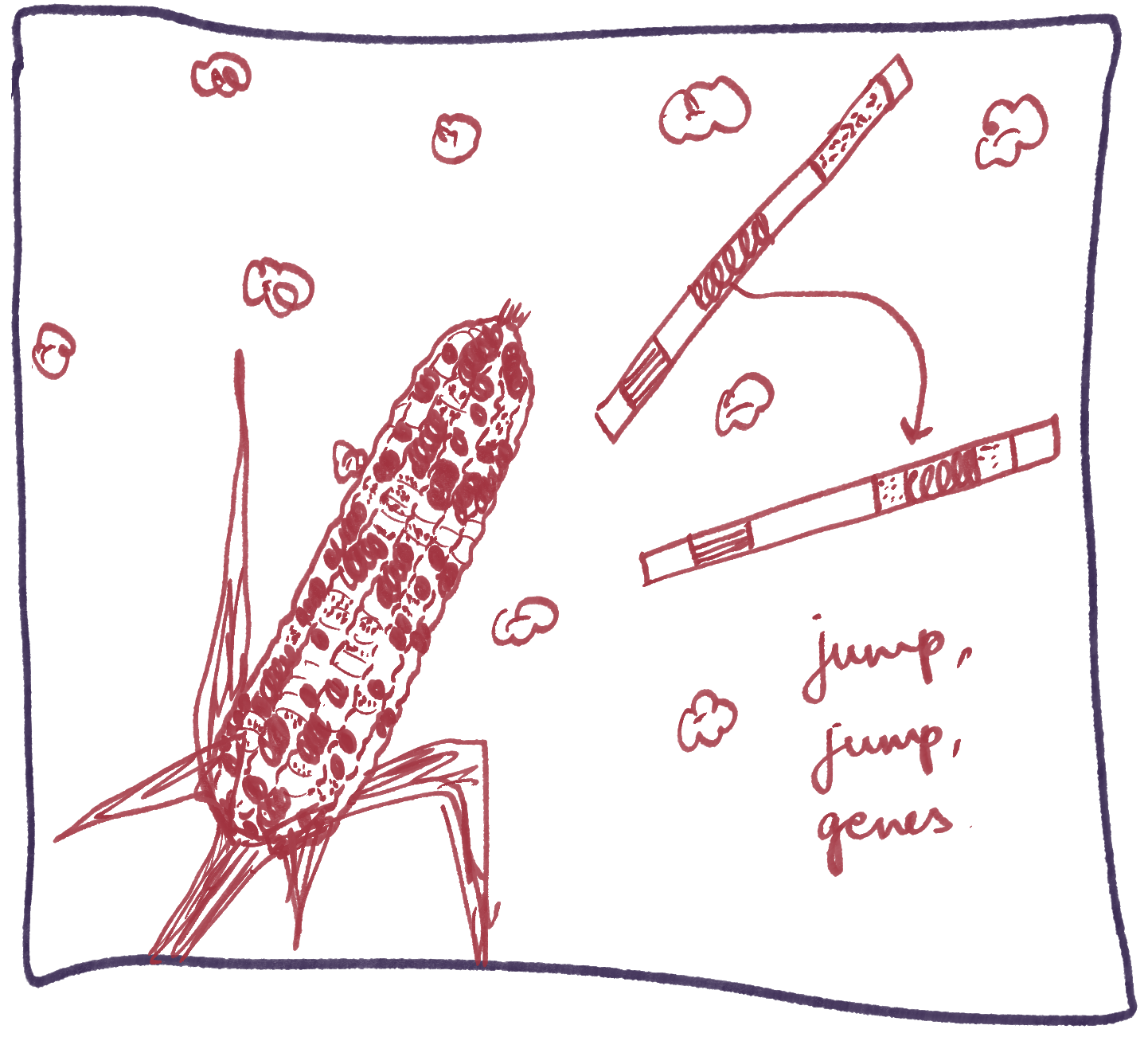
Leap of imagination or bold conjectures are part of most science. If you think about it, observations, knowledge base and further reading provide a base of new ideas and hypotheses to emerge. Barbara McClintock’s observations of mosaic patterns in maize kernels, through extensive genetic breeding that led her to the breakthrough idea of jumping genes (19). She has remarked that she knew the subject; the maize, too well and had developed an intuition about their genetic constitution by looking at the kernel (20). The leap from what is known to what is unknown can be wide. Mendel’s prediction of an hereditary factor based on genetic cross data, Schrödinger’s prediction of an aperiodic crystal as a hereditary molecule, Darwin’s theory of natural selection are all imaginative leaps (21, 22, 23).
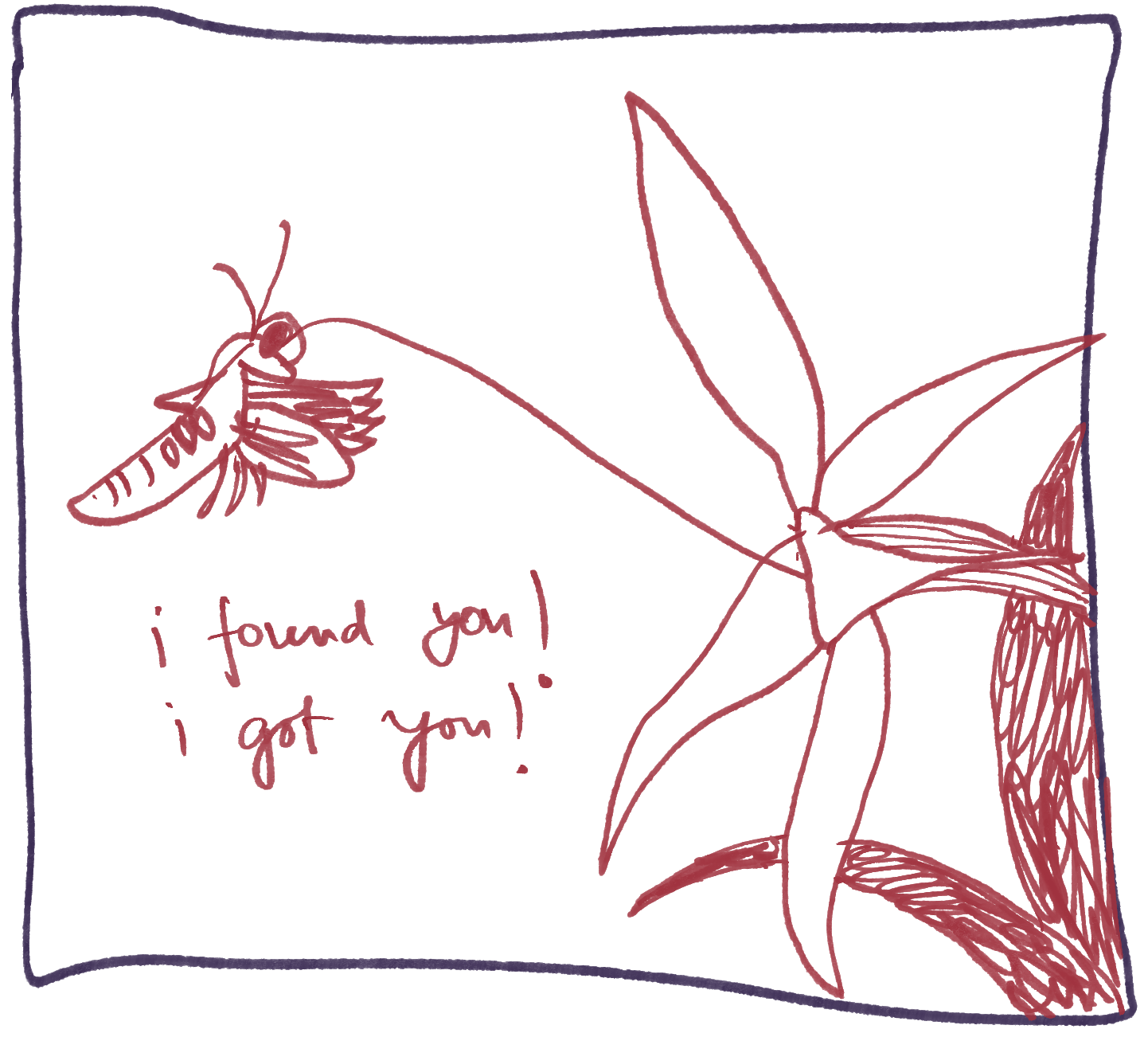
After collecting birds and other flora-fauna from the Galápagos Islands, Darwin studied them. But it was his observation of incremental changes in artificially bred pigeons that led to his theory on natural selection. He superimposed those ideas on beaks of Galapagos finches (24). Based on his understanding of traits and their role in survival, he articulated co-evolution of pollinators and flowers. He predicted the physical features of an elusive pollinator for a Madagascar orchid with an atypically long nectar tube. It was after his death that a moth with proboscis of right length was spotted (25).
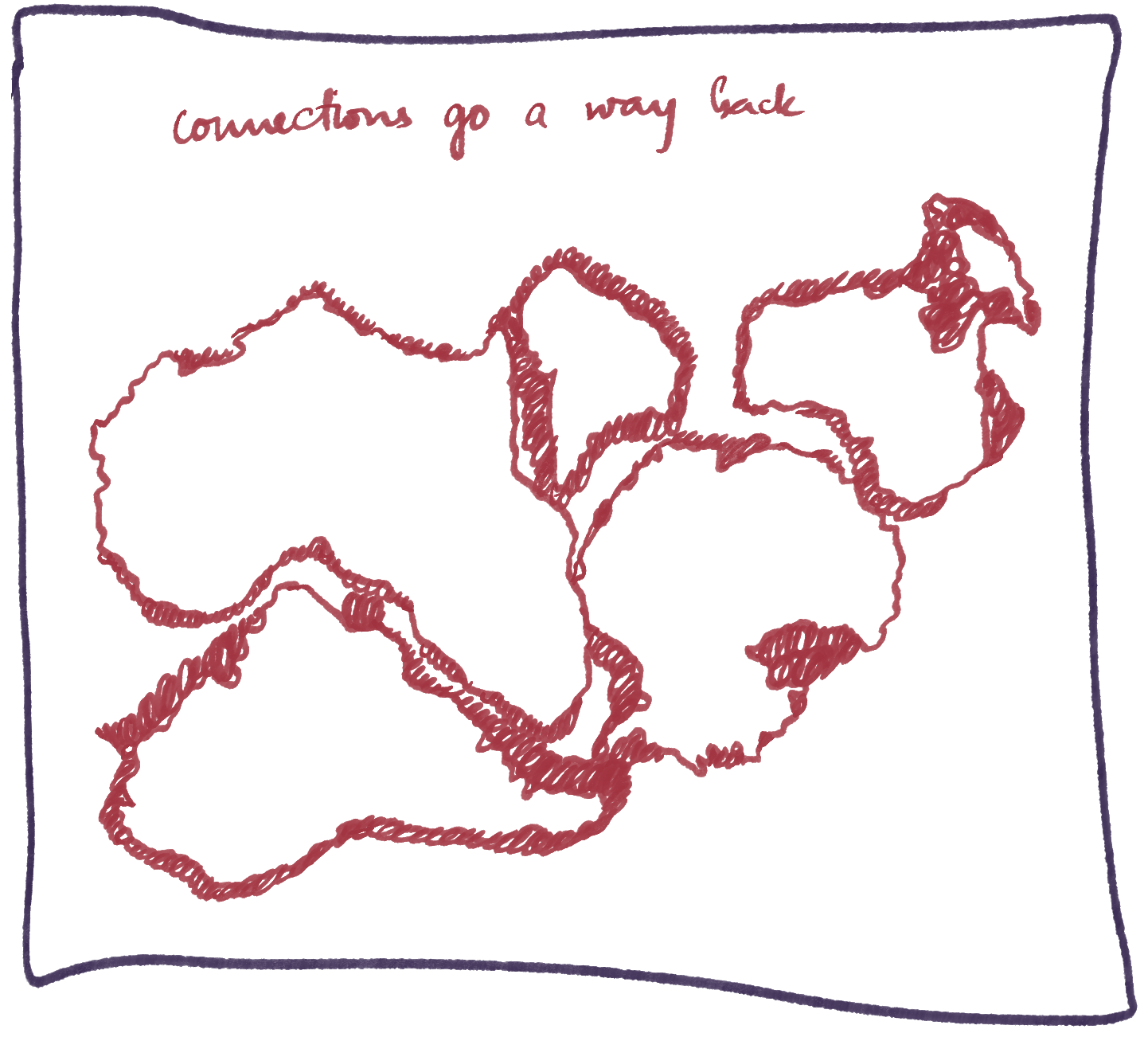
Wegener theorised that all landmass on earth was a singular landmass he named Pangea, around 1912-1915. He looked at the current landmasses as pieces of puzzle that seemed to fit well with each other to make a singular landmass. He argued that landmasses have drifted to arrive at their current coordinates (26). He used common fossils along coasts of South America and Africa as evidence that the land masses were connected at one time. Some coal measures found in the current arctic regions were of tropical origins, arguing that this particular landmass may have been at tropics and moved since. He did not find support for his ideas since he did not have a mechanistic explanation. It was in the 1960s, that observation of magnetic anomalies, and sea floor features, tectonic plates were (theorised and) identified (27). A seismic technological development led to observation of the tectonic plates brought the scientific consensus to Wegener’s ideas (28). A new method of observation was needed to acknowledge the ideas, in due time.
In sciences which rely on historical observations, when many; not all, of these observations can be tied to a theory, it gains confidence. Sometimes the evidence accumulates gradually or a ‘smoking gun’ trace appears to provide better causal explanation for the phenomenon (29). This scientific approach may not stand tall like the standard of controlled scientific experiments, but it suffices. It does so by explaining new evidence or predicting an observation.
Karl Popper argued that science advances by proposing bold, falsifiable conjectures and trying to refute them, not by verification (30). This is a noble idea but in practice scientists work by holding on to their theories and hypotheses. As Duhem-Quine thesis articulates, scientists even account for some inconsistencies in results by supposing auxiliary conditions to account for deviations observed from the predictions based on hypothesis (31). This is not only true of questions like the origin of life, but also experimentally ‘verifiable’ science. In cancer biology research, studies related to cell migration and drug testing are routinely done in vitro on 2-D plates. When the drugs, models and data obtained from there don’t reconcile with patient data or in clinical therapy, the 3-D architecture of cancer is marked as a pertinent factor (32).
Emergence of life was likely a one time event. The nucleic acid, a common genetic code and a particular stereoisomer of amino acids are used in all life forms we know. This suggests that all life is related and is proposed to have evolved from the Last Universal Common Ancestor (33). Given that, and huge biological turnover and geological turnover within four billion years, finding a true ‘smoking gun’ for the origin of life seems extremely unlikely.
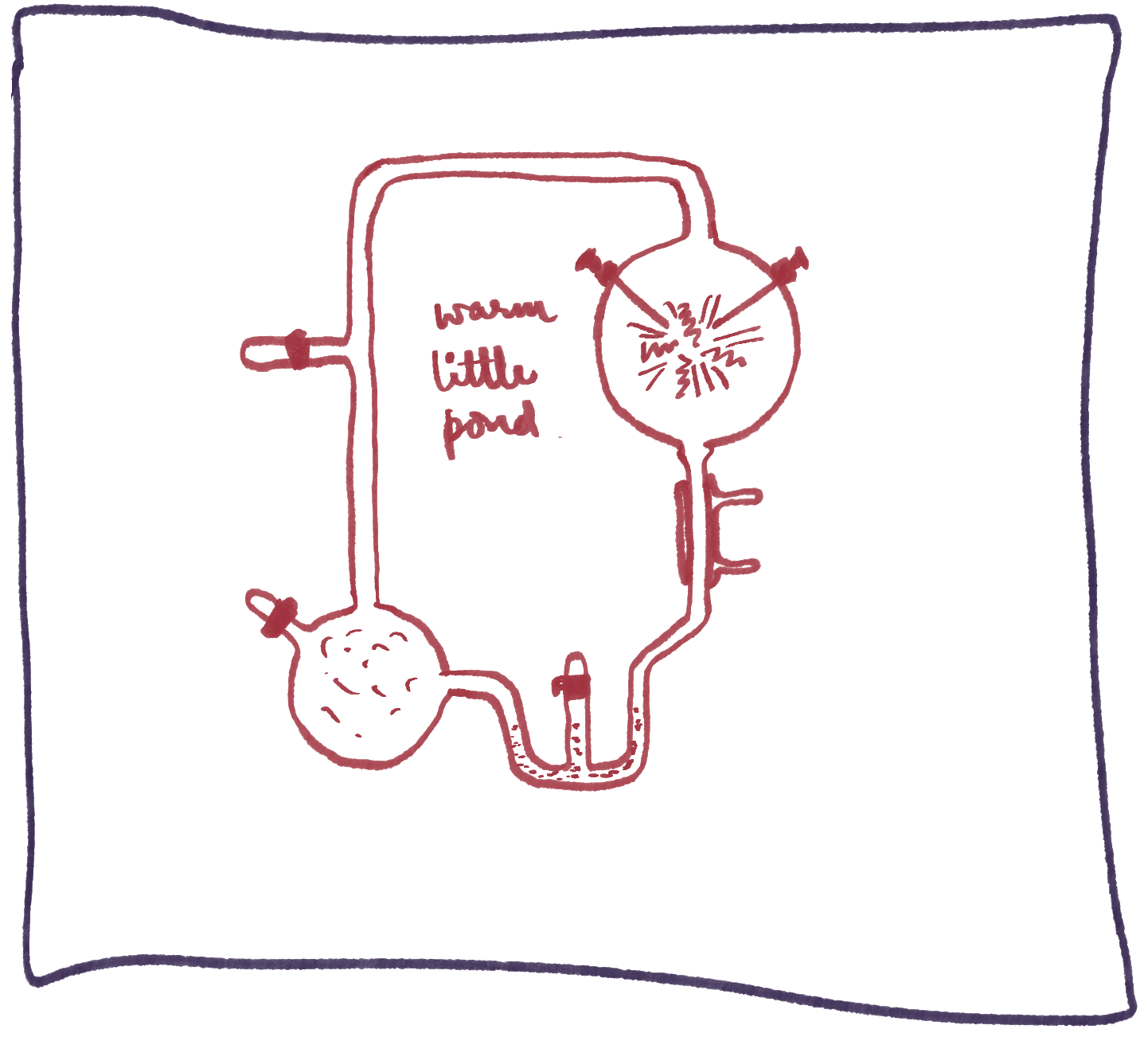
What is feasible though is to have imaginative leaps, multiple theories to argue for/against. Lack of definitive proof is not a failure in this case, but an acceptable opening of the scientific method in the given conditions. Like any other scientific theory, these get updated and revised, either the logic of feasibility or the background assumptions. As more evidence is collected in the lab, as geochemical and physical conditions become clearer (based on evidence), more predictions are possible. It may be possible for these differing theories to reconcile or one to phase out completely in favour of another. Haldane’s hot soup got a favourable push from Urey Miller’s experiment; it has since fizzled out (34). The chemical composition of the chemicals in their experiment and of earth’s atmosphere at that time varies vastly. But it allowed chemists to think it may be possible to show parts of chemistry to biology transition in the lab.
All ‘failed ideas’ bring us closer to possible truths. Origin of life is a question where a decisive experiment or detecting a smoking gun trace are not feasible. Still, we inch closer to possible realities as evidence accumulates, revisions are made to existing theories, some propositions are retired, and assumptions are updated. This is science working as it should, even when; especially when, no crucial experimental evidence is coming.
References
- https://pmc.ncbi.nlm.nih.gov/articles/PMC7182759/
- https://elifesciences.org/articles/63776
- https://plato.stanford.edu/entries/scientific-method/#DisSciMet
- Sigurdsson, B. (1954), Br Vet J
- https://www.nobelprize.org/prizes/medicine/1997/press-release/
- https://evolution.berkeley.edu/…/natural-selection-charles-darwin-alfred-russel-wallace/
- https://www.quantamagazine.org/watching-evolution-happen-in-two-lifetimes-20160922/
- https://pubmed.ncbi.nlm.nih.gov/12650462/
- https://pubmed.ncbi.nlm.nih.gov/16776061/
- https://pubmed.ncbi.nlm.nih.gov/15217990/
- https://plato.stanford.edu/entries/life/#DefiLifeAntiDarw
- https://www.nobelprize.org/prizes/chemistry/1989/cech/article/
- https://nick-lane.net/publications/co2-reduction-driven-by-a-ph-gradient/
- https://pubmed.ncbi.nlm.nih.gov/29502283/
- https://pubmed.ncbi.nlm.nih.gov/19323552/
- https://nick-lane.net/publications/a-biophysical-basis-for-the-emergence-of-the-genetic-code-in-protocells/
- https://pmc.ncbi.nlm.nih.gov/articles/PMC7615569/
- https://pubmed.ncbi.nlm.nih.gov/31841362/
- https://www.nobelprize.org/stories/women-who-changed-science/barbara-mcclintock/
- https://archive.org/details/feelingfororgani0000kell_o0m3
- https://www.nature.com/scitable/…/gregor-mendel-and-the-principles-of-inheritance-593/
- https://en.wikipedia.org/wiki/What_Is_Life%3F
- https://archive.org/details/originofspecies00darwuoft
- https://www.allaboutbirds.org/news/darwins-other-bird-the-domestic-pigeon/
- https://www.nhm.ac.uk/…/moth-predicted-to-exist-by-darwin-and-wallace-becomes-a-new-species.html
- https://www.britannica.com/place/Pangea/Relevance-to-tectonic-theory
- https://en.wikipedia.org/wiki/Continental_drift
- https://agupubs.onlinelibrary.wiley.com/doi/10.1029/JB073i018p05855
- Historical science, experimental science and the…
- https://en.wikipedia.org/wiki/Falsifiability
- https://en.wikipedia.org/wiki/Duhem–Quine_thesis
- https://www.frontiersin.org/…/10.3389/fmolb.2020.00033/full
- https://www.nature.com/articles/s41559-024-02461-1
- https://en.wikipedia.org/wiki/Miller–Urey_experiment